
Melissa's Tried & True Math Manipulatives for Young Learners
When I first started out homeschooling, I used a Montessori-inspired math curriculum called Right Start Mathematics. Right Start was created by a Certified 3-6 Montessori Instructor and Phd in mathematics, Dr. Joan Cotter.
One of the things I always loved about her curriculum was how great it was at making abstract mathematical concepts more concrete for young children. And thanks to the active use of Montessori style math manipulatives in every lesson, my children were able to build strong mental math foundations, Alhamdulilah.
Though I ended up leaving Right Start when my oldest was in sixth grade, I kept all of the math manipulatives that I purchased with the curriculum and have continued to use them with every one of my children since then, regardless of their curriculums. Why? Because they work!
You don't need to turn your home into a replica of a Montessori classroom. With only a few basic manipulatives that can be used again and again over the years, you can help your child build great math foundations for life.
Here are the manipulatives I used back then and still use with my children at home today. Each item is inspired by Montessori math approaches, can be used for many different kinds of math concepts, and are made to be affordable and durable for homeschooling families. Headers are linked for easy shopping!
1-Inch Square Counting Tiles (red, blue, yellow, and green set)
You and your child can use these tiles for everything from counting to patterning to sorting and organizing, to addition, subtraction, multiplication, division, and even measuring for area and perimeter in inches! You only need 100 but this link comes with 400 which can be great for using with multiple children.
Base Ten Blocks (ones, tens, hundreds thousand)
Base-ten blocks help your child visualize and build number quantities with place value. They're also a great manipulitive for performing math operations that require regrouping (aka borrowing). The unit blocks are sized to 1cm, which can also be used for measuring when centimeters are needed.
Stackable Place Value Cards
These cards are a must when helping your child to understand place value and build bigger numbers. You can buy them online or make your own! I made my own when my son was 5, laminated them, and still use the same set today. But I do wish I had color coded them like the ones in the link because having that visual color cue can help some children to recognize the numbers (and places) a little faster. If you love the wooden Montessori look, this version would look nice on a open shelf at home.
AL Abacus (aka Cotter Abacus)
This is NOT your basic wooden toy, tossed last minute into the cart on your way out of ikea, child's abacus.
The AL abacus was created by Dr Joan Cotter to help children, once again, visualize the building up and breaking down of numbers, from the most simple groups and number facts (horizontal work on the front side) to the most complex adding, subtracting, multiplying, and dividing of number groups with place value and regrouping (vertical work on the back side). The beads are also color coded in groups of five to help aid with quick number recognition, skip counting, and quickly visualizing how much of a number may be missing.
Fractions Puzzles
Fractions Puzzles help your child see wholes break into parts. Once they're familiar with that, they can then begin manipulating those aprts, adding and subtracting them together to get other parts. I have the basic rectangular set at home, but you can also buy circular sets like this one to help your child visulize fractions and build wholes in multiple ways.
Moveable Clock
Moveable clocks help your child visualize and calculate the passing of time. The color ocded hands also help to clearly distinguish the minutes from the hours for your child.
Pattern Blocks
My kids loved Pattern Blocks when they were young. They could use them for hours. Great for helping them learn different patterning orders (AB vs ABC vs ABA etc), they're also great for open-ended play and helping children learn to make various shapes and images from other smaller shapes, a wonderful setup for more mature art instruction later on.
Tangrams
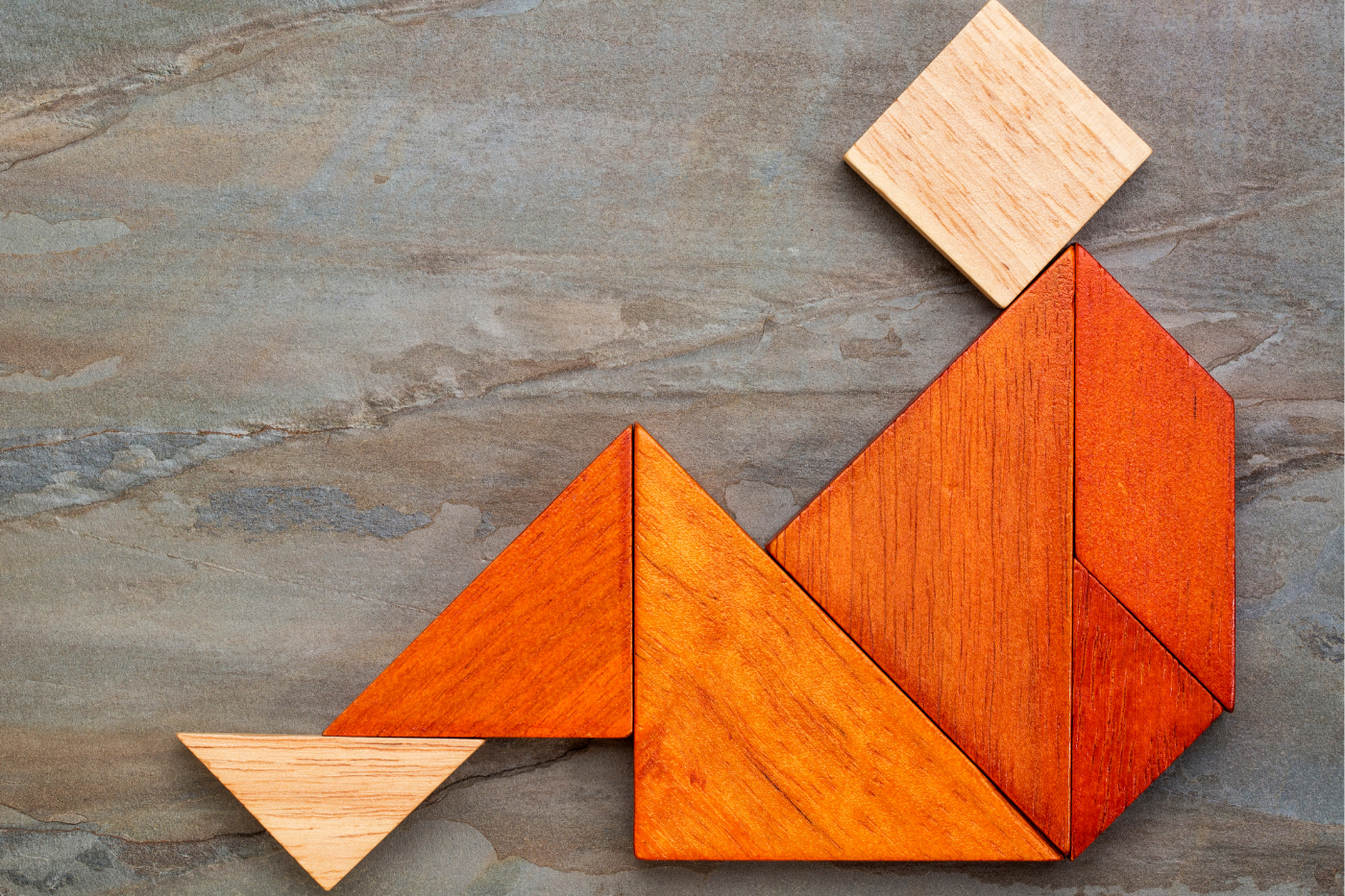
Very different from pattern blocks, Tangrams are an ancient Chinese game that uses a set of 7 shaped blocks of all the same color to create a large variety of images and shapes from everyday life. Playing Tangrams not only helps children recognize and build shapes, but also builds their critical thinking muscles as they have to attempt (and often fail) at many different combinations before figuring out the final image. My favorite version is the Tangoes set for mulitple players that I linked in the heading. But you can also get beautiful wooden sets like this one if you prefer that aesthetic.
Money
This one is a no-brainer. Keeping a small set of coins and bills can help your child learn to use and understand money concepts. Once they get the basics down, they can then proceed to helping you count your change, track prices, subtract a ledger, or even track your spending for weekly purchases like groceries. Handling real money is always more fun for the kids, but the plastic and paper sets like the one I linked are great for everyday math lessons.
3D Geometric Solids
These wooden geoemtric solids help your child visualize and draw 3D shapes. This is important learning for geometry where as they grow, they'll have to determine and calculate sides, angles, and more! It also helps to introduce concepts related to size and volume of an object.